
A new study by CSIR-CCMB researchers has elucidated the molecular mechanisms by which viral infections, particularly RNA viruses like Influenza and COVID-19, can accelerate the formation of amyloid clumps in the brain, a hallmark of neurodegenerative diseases such as Parkinson's. The research highlights the role of viral RNA G-quadruplexes and the cellular protective protein DDX39A in this process.

An IIT Madras study reveals that financial cybercrime victims in India are often highly educated professionals, challenging the notion that only careless or financially unaware individuals are targeted. The research highlights that digital literacy doesn't guarantee protection, as fraudsters exploit stress and emotional vulnerabilities.
A new study by King's College London and the University of Cape Town found that babies born to anaemic mothers have significantly smaller total brain volumes and key brain regions by age two. Using portable MRI scanners, researchers observed these differences from around 12 months of age, highlighting the critical impact of maternal anaemia on early infant brain development.

A joint study by IIT Roorkee and IIT Kanpur has found that a black crust formed by air pollution is accelerating the deterioration of Humayun's Tomb, a UNESCO World Heritage Site in Delhi. The crust, primarily gypsum, traps pollutants, weakening the sandstone and making the monument vulnerable to long-term damage. The study recommends conservation measures, pollution monitoring, and source reduction to protect the historical site.

At Lakme Fashion Week 2026, Sakshi Sindwani proved that high fashion is at its most powerful when confidence takes centre stage. The model and body-positivity creator walked for Namrata Joshipura at the designer's OPPO-presented showcase, bringing her signature energy to a collection that celebrated dark, futuristic glamour.
A recent study indicates that dogs possess the ability to segment human speech into individual words, a skill previously thought to be unique to humans. This "consonant bias" in speech processing appears to develop through regular exposure to human language, suggesting that efficient speech processing is not solely dependent on complex human linguistic capabilities. The findings, published in Science, highlight how brain function can be reshaped by speech exposure even in evolutionarily distant species.

Researchers have discovered a method to externally manipulate a cell's automatic waste clearance process, known as autophagy. This breakthrough, involving the protein LC3, could offer new therapeutic targets for diseases like cancer and Parkinson's, where cellular cleansing mechanisms are often impaired.
The University of Melbourne and the Indian Institute of Science Education and Research (IISER) Tirupati have launched a new 2+2 Bachelor of Science Integrated (Honours) dual degree. This programme offers Indian students a globally connected, research-intensive science education, allowing them to study two years at IISER-Tirupati and two years in Melbourne, graduating with two honours degrees.

The objective should be clear: Energy security without abandoning environmental responsibility; water security without ignoring local concerns; and strategic resilience without sacrificing public confidence, notes Varun Arya.

New research published in the European Heart Journal indicates that even low levels of night-time light exposure, as little as 3 lux, are associated with detrimental changes in heart structure and function. A study involving over 11,000 participants found that increased light at night led to thickening of the left ventricular walls and reduced myocardial contraction, suggesting early heart dysfunction and increased risk of heart failure. Researchers highlight night-time light as a modifiable risk factor for cardiovascular disease.
A new study published in Nature reveals that lab-grown human brain tissues, or organoids, successfully survived, grew, and formed complex structures when transplanted into mouse brains. This breakthrough offers a novel platform for studying human brain development and neurological disorders.

'It is to observe the Sun continuously that you have the Aditya L1 mission.' 'It is in a position from where it can observe the Sun continuously.'

Zoho founder Sridhar Vembu has criticised the concept of Universal Basic Income (UBI), calling it an 'unimaginative and dystopian' vision. He argues that while AI threatens intellectual jobs, humans have endless tasks related to nature, nurture, culture, and spirituality that can provide purpose and sustenance, rejecting the idea of dependency on handouts.

From playing the quietly determined Lata Mehra in Mira Nair's A Suitable Boy to stepping into the supernatural world of Tooth Pari: When Love Bites, Tanya Maniktala has built a career around characters that are anything but alike.

'Nobody can say a quake will strike on a particular day or month. It remains a natural event, governed by factors that are only partly understood, even by researchers working on this across the world.'

Former chief selector and head coach Haroon Rasheed has attributed the decline of Pakistan cricket to the domestic structure changes implemented by former Prime Minister Imran Khan, who insisted on reducing first-class teams despite recommendations for a hybrid model.
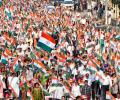
The Union Home Ministry's High-Level Committee on Demographic Changes has requested states and Union Territories to provide detailed data on "visible changes" in religious demography over the last 15 years. This includes information on birth registrations, religious structures, vehicle registrations, property transfers in tribal areas, and educational institutions, aiming to assess demographic shifts and recommend policy measures.

Actor Imran Khan, an American citizen, has been served a notice by Mumbai Police directing him to leave India by October 28 for allegedly violating immigration laws. This comes after his participation in recent political protests. His lawyer plans to challenge the decision in the Bombay High Court.

'The large number of tariff lines in the 90-99 per cent band highlights how deeply embedded Chinese sourcing has become in India's electronics imports.'

A career break does not erase the experience that came before it. But the labour market can act as though it does. The more women invest in building professional careers, the more costly an interruption can become. How, then, do we enable women to make a comeback? Whose responsibility is it? asks Radha Roy Biswas.

The Archaeological Survey of India (ASI) has informed the Madhya Pradesh High Court that a massive structure dating back to the Parmar kings existed at the Bhojshala temple-Kamal Maula mosque complex, and the current structure was built from the remains of temples.

'Hydro-seismicity is a phenomenon that typically shows up during and just after the monsoon.' 'Heavy rain causes water to percolate deep into the rock, and where there are fractures, that water fills the pores and builds up what we call pore water pressure.' 'That pressure can widen existing cracks, and eventually the rock gives way -- which surfaces as tremors.'

'Members of Indian family businesses have considered it their birthright to work there and responsibility to take care of it.'

'It appears to be a combination: A glacier breaking away, and a dam-like formation downstream reaching capacity and releasing water suddenly.'
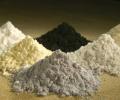
A new study reveals that despite China's significant control over global rare earth mining and processing, its dominance has a critical weakness: the US and Japan hold the majority of core patents for advanced rare earth functional material technologies. This technological gap means China lags in higher-value applications, impacting its strategic advantage in the industry.

Researchers at IIT Madras have patented a chemical-free antibacterial surface that physically eliminates harmful bacteria, including "superbugs," without relying on antibiotics or disinfectants. This innovative technology uses specially engineered nanostructures to rupture bacterial cell walls, offering a sustainable solution to Antimicrobial Resistance (AMR) for biomedical and public health applications.
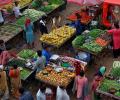
'In fact, when monetary policy has been deployed, it does not distinguish between types of shocks. It goes straight for the kill.'

A five-storey PG accommodation in Satya Niketan, South-West Delhi, collapsed, trapping numerous students and raising immediate concerns about building safety and construction standards in congested areas. Residents reported a "sudden tremor" and rushed to assist in rescue efforts, highlighting the precarious state of old buildings converted into student housing without proper maintenance or structural checks.

A research paper by the National Council of Applied Economic Research (NCAER) recommends that Bihar revoke its alcohol ban, citing its failure to reduce violence against women and a rise in illicit drug and alcohol consumption. The report suggests that reinstating the liquor excise tax would significantly increase state revenues and decrease enforcement costs.

A joint report by Dell Technologies and Zinnov reveals that despite high ambition, nearly 70% of India's Global Capability Centres (GCCs) are stuck at the pilot stage for AI adoption. Foundational gaps in data, infrastructure, and governance are identified as key bottlenecks preventing the scaling of AI initiatives into enterprise-wide production. The report highlights the need for significant reskilling of the workforce and robust foundations for industrialising AI responsibly.

The United Arab Emirates (UAE) has expressed intent to invest an additional $25 billion in India, with an ultimate goal of reaching $100 billion in investments, Union Minister Piyush Goyal announced. This comes as both nations plan to enhance cooperation in shipping, ports, energy, and emerging technologies, against a backdrop of expanding bilateral trade.

A five-storey building in South Delhi's Satya Niketan area collapsed, trapping an estimated 30 to 50 students under the debris. Rescue operations are ongoing, with locals reporting calls from those trapped inside. The building, a PG accommodation, was reportedly undergoing basement construction and had a weak foundation. Residents expressed concerns about the age and maintenance of buildings in the area.

Sikkim has identified 40 high-hazard glacial lakes, with 16 at the highest risk of catastrophic outbursts. Following a devastating GLOF in 2023, the state is developing India's first dedicated GLOF Risk Mitigation Protocol, using advanced monitoring and interdisciplinary approaches to protect downstream settlements and serve as a model for other Himalayan regions.

'For Indian institutions this year, global peers are outpacing in key areas such as RoI, entrepreneurship, and alumni outcomes.'

Finance Minister Nirmala Sitharaman announced that the Goods and Services Tax (GST) Council's October 7 meeting will focus on 'GST 2.0' process reforms, including e-invoicing and input tax credit rules, while also addressing complex issues surrounding the taxation of the digital economy and cryptocurrency.

Sculptor Akash Tirmal explains how he designed the 22 feet idol of Ganesh Galli's MumbaiCha Raja using Plaster of Paris, without any readymade moulds.
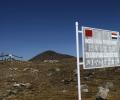
Scientists have discovered a rare leafless orchid species, Gastrodia keyiensis, in a remote gorge along the Keyi River in Arunachal Pradesh. This elusive orchid, which lacks leaves and chlorophyll, relies on soil fungi for nutrients and was found at an altitude of around 1,000 metres. The discovery highlights the rich biodiversity of Arunachal Pradesh and the need for conservation.
Researchers from IIT Guwahati and BHU have devised an eco-friendly biological method to treat textile wastewater, specifically targeting toxic azo dyes. Their novel bacterium, 'Brevundimonas sp. AJZ05', effectively degrades 98.50 per cent of Direct Blue-6 dye, producing non-toxic byproducts, offering a sustainable alternative to conventional chemical treatments.
A new study reveals that neuron networks in the brain's hippocampus, the memory centre, become sparser but more structured and refined as animals mature.
A report by policy think tank The Dialogue reveals that India's artificial intelligence (AI) ecosystem is primarily constrained by a shortage of skilled talent and a lack of data standardisation, rather than market concentration. The study, which surveyed 308 stakeholders, found that talent availability and data usability are major concerns, with a significant reliance on open-source AI models.
